
Every day, the faculty at Detroit Mercy Dental bring unique perspectives and expertise that shape the future of oral health and dental education. In honor of Black History Month, we are excited to present Reflecting on Black History: Faculty Q&A, featuring three distinguished leaders:
Melanie E. Mayberry, D.D.S., M.S.-HCM – clinical professor and specializing in prenatal dental care.
Anthony L. Neely, D.D.S., M.Dent.Sc., Ph.D. – associate professor, committed to advancing clinical training and patient care.
Tamika N. Thompson-Sloan, D.D.S. ’02, M.S. ’11, FACD, FICD – clinical associate professor, Diplomate of the American Board of Periodontology, with extensive expertise in periodontics and mentoring future dental professionals.
In this Q&A, our faculty share insights on education, leadership, and mentorship, reflecting on how history, culture, and representation continue to shape dental education and patient care. Join us to hear their stories, perspectives and experiences that highlight the lasting impact of Black history at Detroit Mercy Dental.
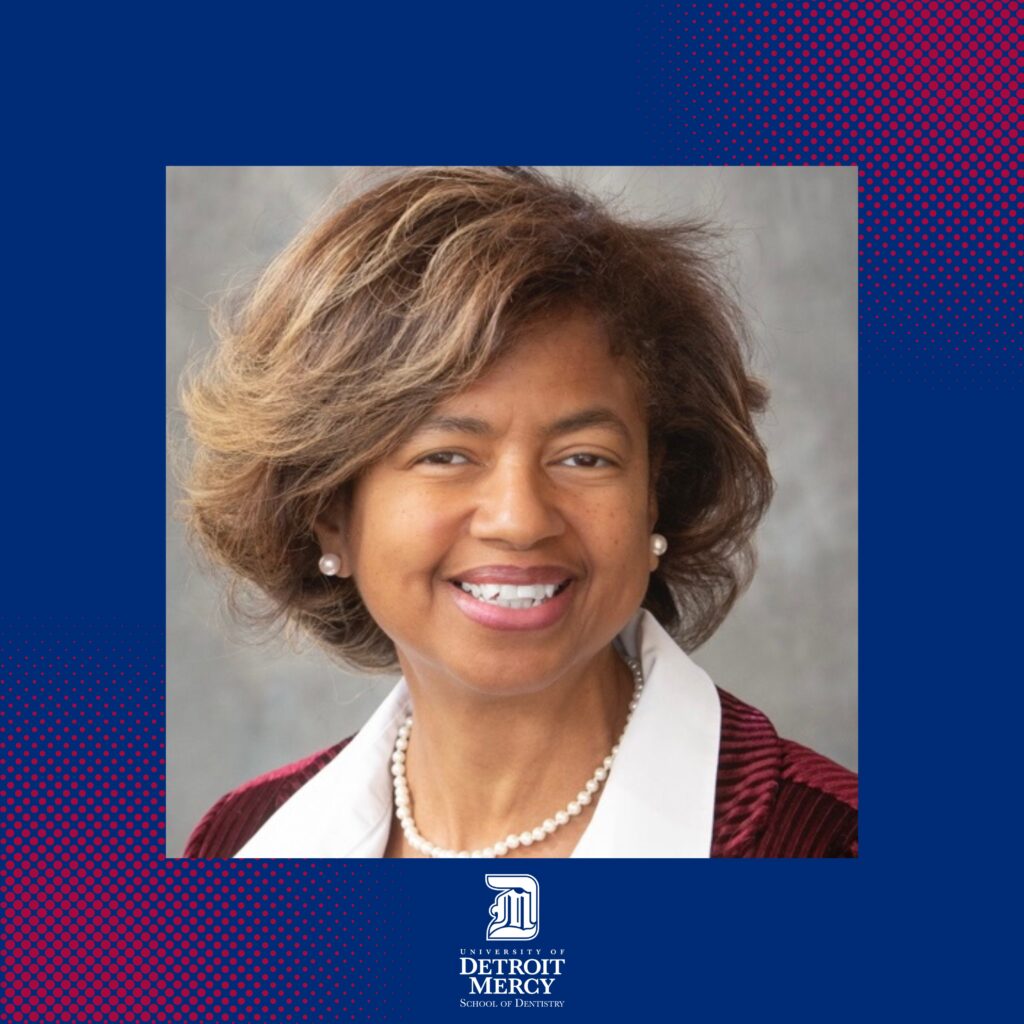
Melanie E. Mayberry,
D.D.S., M.S.-HCM
Clinical Professor and Division Director, Practice Essentials and Interprofessional Education
Q: Research shows that up to 60–75% of pregnant people experience gum disease, yet many do not receive dental care during pregnancy (Xiong et al., 2006; American College of Obstetricians and Gynecologists, 2013). How have these gaps in care influenced your approach to maternal and prenatal dental health?
A: Disparities should always be considered when engaging in work that seeks to help reduce barriers, close healthcare access gaps, and improve patient care experiences and outcomes. Knowing disparities creates a better foundation to understand why we are seeing less than ideal oral health and less than ideal access to care for vulnerable communities.
Q: Given that some populations face higher risks of pregnancy-related periodontal disease (Offenbacher et al., 2006; Wu et al., 2015), what strategies do you use to educate and mentor students on providing thoughtful and effective care for expectant mothers?
A: In my division, Practice Essentials and Interprofessional Education, we teach culturally sensitive care to dental students for current and historically marginalized communities. We teach culturally sensitive care to dental students serving current and historically marginalized communities. We also provide instruction through our person-centered care course. When students grasp these skills, they have the tools to translate and apply their knowledge to the unique care considerations of expectant mothers. Additionally, last year, our clinical dental students and Advanced Education in General Dentistry residents received an interprofessional and interdisciplinary in-service on perinatal oral health to help engage learners and providers in our grant initiative to provide access to care and funding for dental treatment to qualified perinatal women.their knowledge and skills to the unique care considerations of expectant mothers. Additionally, last year, our clinical dental students and Advanced Education in General Dentistry residents received an interprofessional and interdisciplinary in-service on perinatal oral health to help engage learners and providers in our grant initiative of providing access to care and funding for dental treatment to qualified perinatal women.
Q: How does your work in interprofessional education help improve outcomes for mothers and families in communities where access to prenatal care may be limited?
A: The work of interprofessional education provides awareness, training, and experiences to learners and healthcare providers on the importance of perinatal oral health and how poor oral health can negatively impact pregnancy and birth outcomes. Knowing this helps patients and providers appreciate the importance of seeing a dentist and educates non-dental healthcare providers that the University of Detroit Mercy School of Dentistry is an option for their patients’ care, a committed community partner, and a valuable resource. We reduce barriers to care for pregnant people by providing dental treatment at all stages of pregnancy and financial support to qualified women so they can receive the care they need. We also provide care for all members of the family, including geriatric, pediatric, adult, urgent, and comprehensive care.
Q: During Black History Month, what message would you share about the importance of oral health equity for Black mothers and their children?
A: Oral health is essential for overall health. For the space we share as a community, society, country, and world to be truly healthy, whole, and well, each member of our society must be healthy, whole, and well. Until this is fully understood and realized, we will never convert our greatest potential into our greatest good.
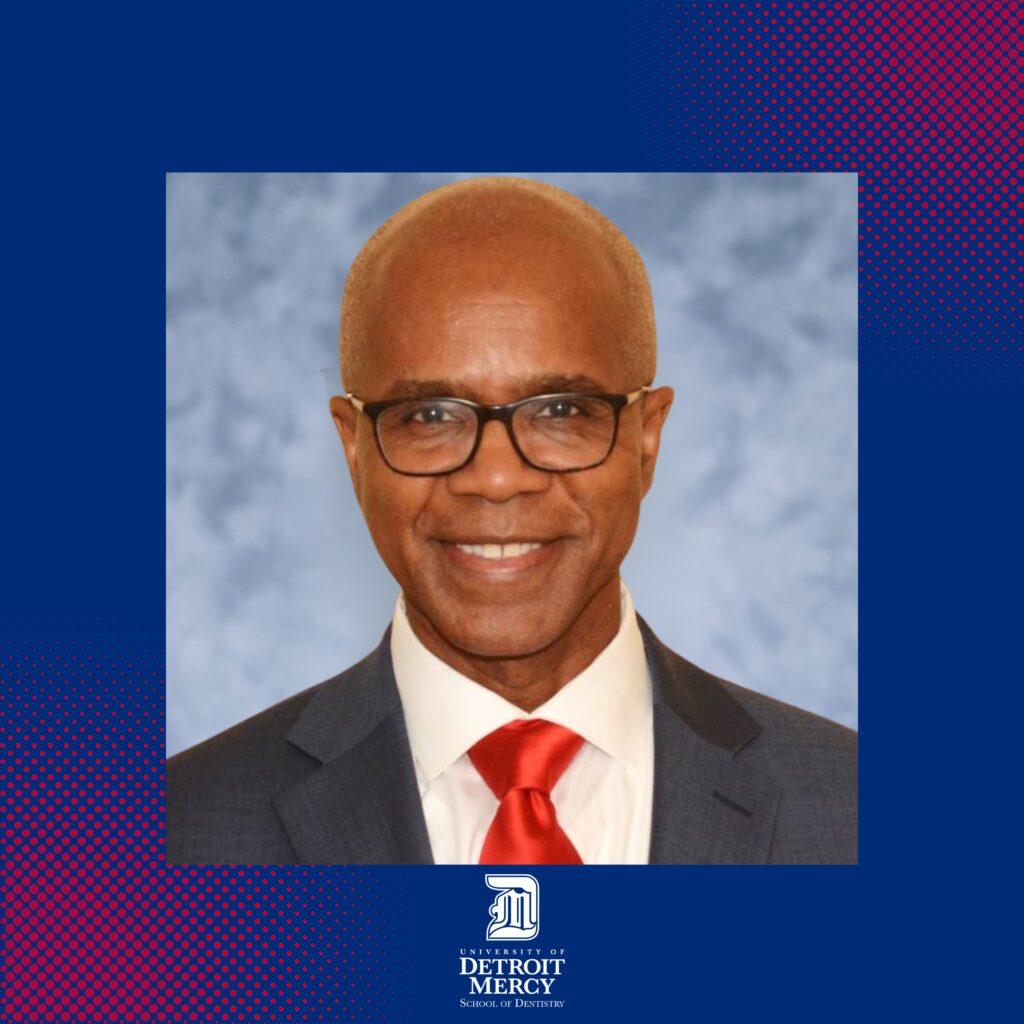
Anthony L. Neely,
D.D.S, M.Dent. Sc., Ph.D.
Associate Professor and Program Director of Graduate Periodontics
Q: During Black History Month, what message would you share about the importance of education, representation, and leadership in Periodontics, and how it shapes the next generation of dental professionals?
A: Black History Month is celebrated in February each year, but Black History is American history. In fact, Black History is inextricably woven into the fabric of America. For nearly the entire history of the United States, people of African descent have been part of building the country’s foundation. Deplorably, during most of that history, Blacks were held in bondage and forced to labor and survive at the whim of their enslavers. Slaves were prohibited from partaking in any of the freedoms guaranteed by the Constitution. Well after the abolition of slavery in 1865, the vestiges of the old system persisted in nearly every aspect of American society. Segregation in housing and education was codified in law and strictly enforced in most places across the country until the Supreme Court’s 1954 Brown v. Board of Education decision, ending state-sanctioned segregation. The previous ruling better known as “Separate but Equal,” was ushered in by the Supreme Court decision Plessey vs. Ferguson in 1896. Stubbornly, some localities, particularly in southern states, refused to enforce the court order and maintained segregated schools for nearly two decades more, denying many Black students access to needed resources and opportunities. As a student who attended segregated schools for part of my education, I am also aware of the rarity of being an African American dental educator, especially in the specialty of Periodontics. The impact of my leadership positions as a faculty member, mentor and Director of the Graduate Program in Periodontics here at Detroit Mercy Dental and elsewhere is also understood. I believe that is important for students, patients and staff to what is achievable with hard work, dedication and most importantly, opportunity. The scarcity of people with my background in influential positions makes it vital to show others that there is a pathway for them to pursue similar career directions. I try to have these discussions with students as they rotate through our clinic as well as during meetings with Student National Dental Association (SNDA) members. I believe that all of society benefits from having talented people with diverse voices and experiences in our profession. Society has improved significantly during my lifetime, but much work still needs to be done.
Q: How do you ensure culturally aware and responsive care in your program, given Detroit’s diverse patient population?
A: As Director of Graduate Periodontics, I have the responsibility of directing an educational program that teaches dentists from vastly different backgrounds how to become periodontal and dental implant specialists. Residents spend countless hours in didactic and clinical training learning how the complex interplay between oral microflora bacteria) and the body’s immune system leads to the development and progression of periodontal diseases and tooth loss. However, understanding the technical aspects of the profession represents only one aspect of training. Residents also learn about who is affected by the disease and why. They learn that according to the 20009-2014 National Health and Nutrition Examination Survey (NHANES), periodontitis (gum disease) affects 42.2% of 30+ year-old US adults. Whereas this percentage is unacceptably high for everyone, the burden is not shared equally among all segments of the population. The rate of periodontitis is 59.7% among Mexican Americans, 56.6% among Non-Hispanic Blacks, 46.2% among other ethnic or multiracially identified groups and 37% among Non-Hispanic Whites. Although bacteria can cause periodontal disease, lack of access to proper oral health care, insufficient resources, comorbid conditions like uncontrolled diabetes, smoking, and obesity are among the important factors that help to explain the disparity among groups. Learning how to interact with those who suffer from the conditions we treat is equally, if not more important than the treatment itself. As aforementioned, the population we serve at Detroit Mercy is diverse with respect to ethnicity, religion, gender, disability, health and social status. Despite these differences, we strive to treat everyone we serve with dignity and respect. In fact, understanding cultural competence is so important that we build it into our program. To that end, we seek to make everyone we serve feel cared for and welcomed regardless of background. In keeping with Catholic and Jesuit traditions, we meet people where they are, despite their differences. Faculty model this behavior in every interaction with each patient, resident and staff member they encounter. A part of my role is to foster and maintain an environment that allows post-graduate students to learn the technical aspects of the profession while deepening their understanding of the humanity required to provide the care required to restore oral health. Faculty meet on a regular basis to assess not only the growth of each post-graduate’s technical skills, but also their ability to communicate and connect with patients. I frequently remind residents of the awesome trust our patients place in them and the reciprocal responsibility to honor and be worthy of that trust.
Q: How does your program engage post-graduate students and faculty in community outreach, and what impact do these initiatives have on improving access to care both locally and abroad?
A: We encourage all of our post-graduate students to give back to the community by participating in programs such as the Annual Men’s Health Event at Ford Field. This is a day-long program including staff, students, post-graduates and faculty from the dental school working together that provides free screenings to anyone in the community. In addition, men with suspicious lesions are seen at the Graduate Periodontics clinic for free biopsies. Other activities include outreach at free clinics in Detroit and surrounding areas and mission trips abroad to provide free treatment to those who otherwise could not afford care.
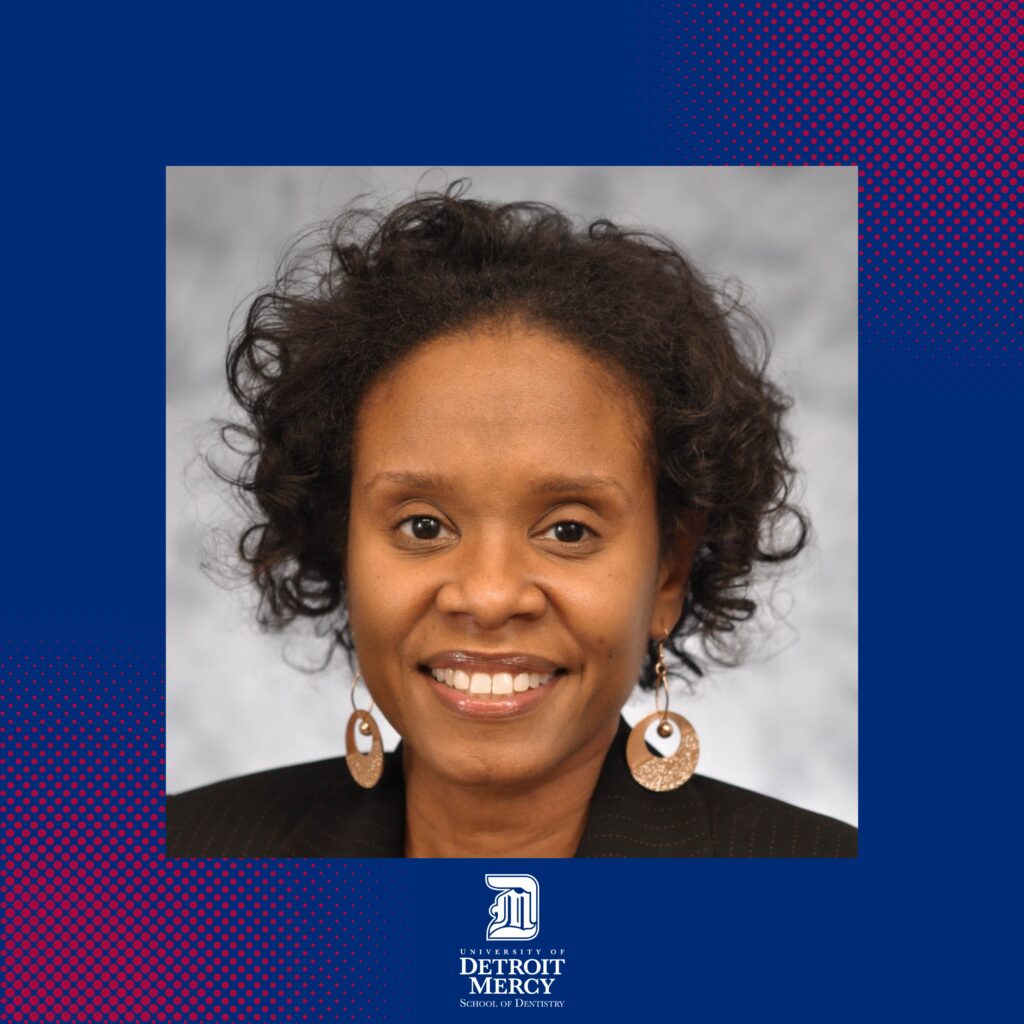
Tamika N. Thompson-Sloan,
D.D.S. ’02, M.S. ’11, FACD, FICD
Diplomate, American Board of Periodontology
Clinical Associate Professor
Divisions of Graduate Education & Clinical Dentistry
Q: As someone from the Detroit area and a periodontist serving the community, which includes veterans, how has your background influenced your approach to patient care?
A: My background shapes my approach to patient care because I have been exposed firsthand to the medical system. Not only am I a person diagnosed with a chronic condition, but I am also a doctor and an African American patient. That perspective helps me see dentistry through my patients’ eyes. I prioritize education so people understand the short- and long-term impacts of their choices and how those choices affect their overall health. As a periodontist, I always prioritize preserving natural teeth. I remind patients that we’re a team. I aim to always do something for them, never to them because successful outcomes require partnership. I speak to my patients and not above or beyond them. I meet my patients where they are and put things in a perspective that they understand. My aim is always to empower my patients and make them active participants in their overall health.
Q: Periodontal disease is highly prevalent in the United States, with about 42% of adults aged 30 and older affected and roughly 8% experiencing severe disease (Eke et al., 2015). How does this high burden of disease influence your approach to clinical practice and to educating students?
A: It reinforces my deep commitment to prevention and education. I help patients understand how systemic conditions like diabetes affect oral and overall health. I share my story with patients and my students. Sharing my story about my kidney transplant lets my students see a responsible doctor who has experienced health challenges. It enables credibility with the patients. They are more likely to listen because they can see me as a real person with real problems. My African American students and patients further see determination, overcoming and persistence. This removes excuses and forces patients and students to take ownership of their actions and medical conditions. Through outreach, I extend care and knowledge beyond my practice. I’m passionate about serving Black communities because early awareness can help prevent the progression to diabetes, kidney disease, and hypertension. Too often, people learn about the impact too late when options are limited. Education affords me the opportunity to change that outcome, especially in my community.
Q: What strategies do you emphasize when mentoring dental students about providing effective, patient-centered care and addressing oral health disparities?
A: I ask students to treat every patient as they would their own mother, what would they do differently? I teach them to see the person, not just the procedure. When patients feel genuinely cared for, trust and adherence improve. Cultural competence is essential to understanding disparities, achieving true informed consent, and honoring each patient’s values, needs, and goals.
Q: During Black History Month, what message would you share about the importance of representation and leadership in periodontics?
A: The message that I would share is that representation matters. It is important for all dentists, especially Black dentists, to be at the table in organized dentistry, in dental schools educating our students, and in the community serving. As an educator and periodontist, I serve as a role model, allowing students to see someone who looks like them in a profession they are interested in. I am a representation of what is possible. My job is to welcome the students in, educate them, and congratulate them on the way out. This is one of the main reasons I have served as Stage Marshall during commencement for several years. The other message I would share is that “to whom much is given, much is required”. True leadership carries a weight of selflessness and understanding that the task and purpose are bigger than one person. I share my story, the adversities, the wins, and the losses, as well as my resources, in hopes of opening doors and inspiring the next generation to lead with purpose. As I invest in my students, I encourage them to pay it forward, whether in practice, academia or in community mentoring.
As we reflect on Black History, the voices and experiences of our Detroit Mercy Dental faculty remind us that leadership, mentorship, and patient-centered care are deeply connected to the history, culture, and communities we serve. From advancing prenatal oral health to guiding the next generation of dental professionals, Drs. Mayberry, Neely, and Thompson-Sloan demonstrate how expertise, empathy, and commitment intersect to improve oral health outcomes. Their insights not only honor the legacy of Black history in dentistry but also inspire students, colleagues, and the community to carry forward a standard of care rooted in education, representation, and service.
References
American College of Obstetricians and Gynecologists. (2013). Oral health care during pregnancy and through the lifespan. Committee Opinion No. 569. Obstetrics & Gynecology, 122(2 Pt 1), 417–422. https://doi.org/10.1097/01.AOG.0000433007.16843.10
Eke, P. I., Dye, B. A., Wei, L., Slade, G. D., Thornton-Evans, G. O., Borgnakke, W. S., Taylor, G. W., Page, R. C., Beck, J. D., & Genco, R. J. (2015). Update on prevalence of periodontitis in adults in the United States: NHANES 2009–2012. Journal of Periodontology, 86(5), 611–622. https://doi.org/10.1902/jop.2015.140520
Offenbacher, S., Boggess, K. A., Murtha, A. P., Jared, H. L., Lieff, S., McKaig, R. G., Mauriello, S. M., Moss, K. L., & Beck, J. D. (2006). Maternal periodontal disease and prematurity. Part I: Obstetric outcome of prematurity and growth restriction. American Journal of Obstetrics and Gynecology, 195(2), 384–390. https://doi.org/10.1016/j.ajog.2006.01.078
Wu, M., Chen, S. W., & Jiang, S. Y. (2015). Relationship between periodontal disease and risk of preeclampsia: A meta-analysis. Scientific Reports, 5, 11143. https://doi.org/10.1038/srep11143
Xiong, X., Buekens, P., Vastardis, S., Yu, S. M., & Pridjian, G. (2006). Periodontal disease and adverse pregnancy outcomes: A systematic review. BJOG: An International Journal of Obstetrics and Gynaecology, 113(2), 135–143. https://doi.org/10.1111/j.1471-0528.2005.00827.x